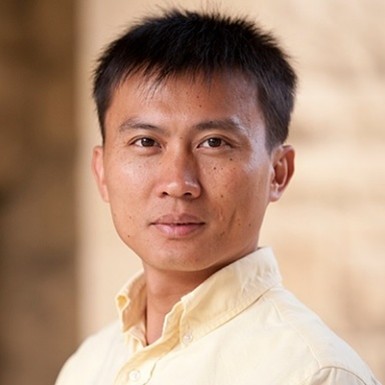
Prof. Yi Cui | Report Title: High Energy Batteries Through Nanoscience
Prof. Yi Cui, Fortinet Founders Professor of Engineering in the Department of Materials Science and Engineering at Stanford University, also holds a joint appointment as Professor of Photon Science at SLAC National Accelerator Laboratory and serves as Co?Director of the DOE?funded Battery500 Consortium. Received a B.S. in Chemistry from the University of Science and Technology of China in 1998, a Ph.D. in Chemistry from Harvard University in 2002, and completed a Miller Postdoctoral Fellowship at the University of California, Berkeley from 2003 to 2005. Appointed Assistant Professor at Stanford in 2005, promoted to Associate Professor in 2010, and to Full Professor in 2016.
Research interests center on nanomaterials for energy and environmental applications, including high?energy?density rechargeable batteries, efficient electrocatalysis, water purification, and smart functional textiles. Authored several hundred papers in leading journals such as Science and Nature, with a Google Scholar H?index of 300. Beyond academic work, founded Amprius Inc. and serves on its board of directors, and co?founded 4C Air Inc., bridging fundamental discoveries with commercial deployment. Notable distinctions include election to the U.S. National Academy of Sciences (2022) and the European Academy of Engineering (2023); recipient of the Ernest Orlando Lawrence Award (U.S. Department of Energy, 2020), the Materials Research Society Medal (2020), the Global Energy Prize (2021), and the Blavatnik National Award in Physical Sciences and Engineering (2017). Featured multiple times in Scientific American’s “Top 10 World Changing Ideas” list, and ranked No. 1 in materials science on Thomson Reuters’ list of “Hottest Researchers of Today” in 2014. Serves as Associate Editor of Nano Letters and on the editorial boards of several other international journals. Elected Fellow of the American Association for the Advancement of Science, the Materials Research Society, the Electrochemical Society, the Royal Society of Chemistry, and other professional societies.
|